 Bramble & Coop
Fresh herbs on the windowsill are one of the small pleasures of winter cooking. Some herbs adapt to indoor life easily; others sulk. Start with the easy ones.
Herbs that like indoor life
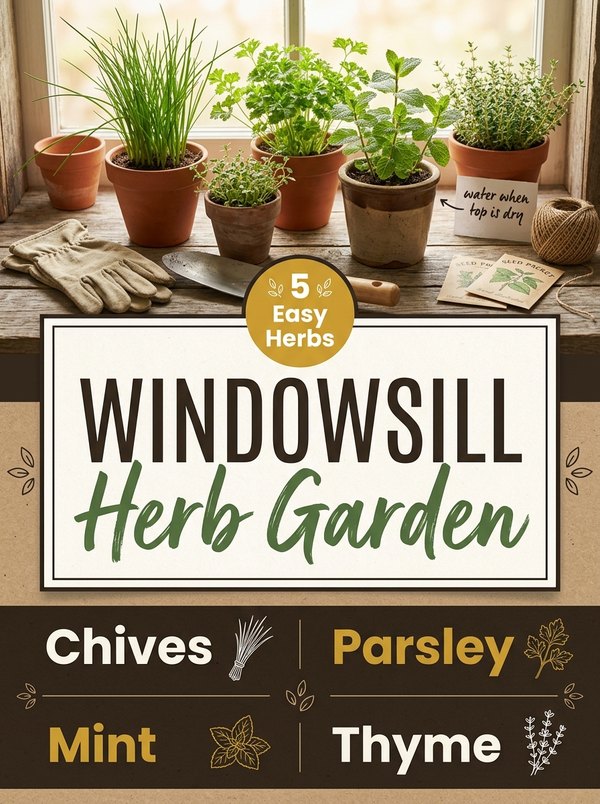
- Chives: tough and steady
- Parsley: slow but reliable
- Mint: grows almost anywhere, keep it in its own pot
- Thyme and oregano: like bright light and dry soil
- Basil: easy in summer, needs warmth and strong light in winter
Light matters most
Herbs need at least five to six hours of bright light. A south-facing window is best. If your windows are dim, a small LED grow light on a timer for 12 to 14 hours a day makes the difference between leggy and lush.
Pots and soil
Use pots with drainage holes and a light potting mix, not garden soil. Six-inch pots give roots enough room. A saucer of pebbles underneath catches water and adds a little humidity.
Get the Free Backyard Homestead Planner
A printable one-page plan: map your yard, place beds, compost and a small flock, and stretch the season into winter.
Thank you! Your checklist is ready.
No spam. Unsubscribe anytime · Privacy
Watering
Most indoor herbs die from too much water, not too little. Water when the top inch of soil is dry. Mediterranean herbs such as thyme, oregano and rosemary like to dry out more between waterings than parsley, chives and mint.
Harvest often
Snip from the top and cut no more than a third of the plant at a time. Regular trimming keeps herbs bushy. Pinch off flower buds on basil so it keeps making leaves.
Bring outdoor herbs in
Before the first frost, dig small clumps of chives, parsley or thyme, pot them up and keep them in a shady spot outdoors for a few days before moving them inside.
Herbs here are for cooking and enjoyment. For anything health-related, talk with your doctor rather than relying on home herbs.