 Bramble & Coop
A cold frame is a bottomless box with a clear lid. It traps the sun's warmth and blocks wind, so lettuce, spinach and scallions keep growing weeks after the open garden has stopped.
What you need
- An old window or a sheet of polycarbonate for the lid
- Four boards to make a box slightly smaller than the lid
- Two hinges and a stick or prop to hold the lid open
- Screws, a drill and a saw
Build it
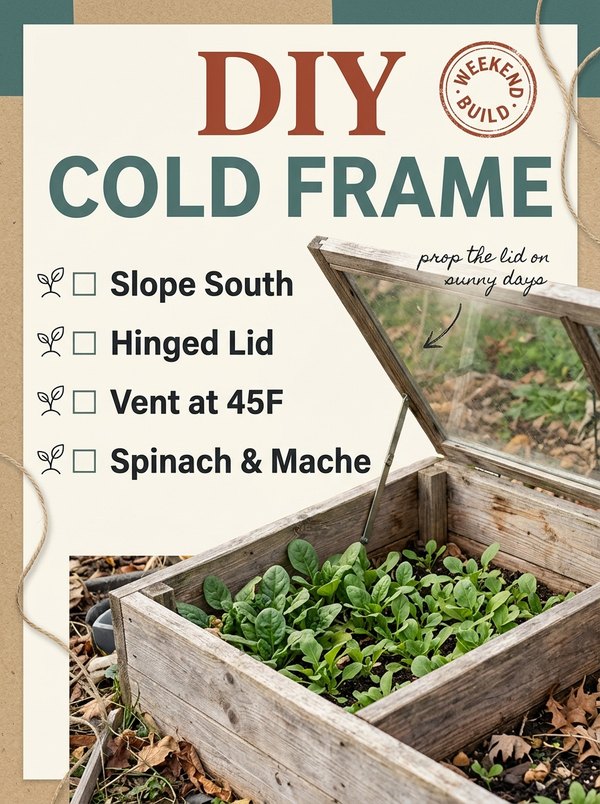
Make the back of the box about 6 inches taller than the front so the lid slopes toward the sun. A typical size is 3 by 4 feet, 18 inches tall at the back and 12 at the front. Screw the corners together, attach the lid with hinges on the high side and set the frame on level ground facing south.
Old windows: one caution
Windows made before 1978 may have lead paint on the frame. If you are not sure, use new polycarbonate instead, or seal the frame with exterior paint and never sand it.
Get the Free Backyard Homestead Planner
A printable one-page plan: map your yard, place beds, compost and a small flock, and stretch the season into winter.
Thank you! Your checklist is ready.
No spam. Unsubscribe anytime · Privacy
A printed and digital project book about running a small homestead on a quarter acre or less: greenhouse, mini coop, garden layouts and many more step-by-step builds with photos and sketches.
See what is inside the bookAffiliate link. Sold through Digistore24; check the current price and refund terms on the order page. Results depend on your yard, climate and effort.What to grow
- Spinach and mache, the most cold-tolerant greens
- Lettuce mixes and arugula
- Scallions and baby kale
- Radishes in early spring
Venting is the real job
On a sunny day a closed cold frame can overheat quickly, even in winter. Prop the lid open a few inches whenever the day is above about 45 F and close it in the afternoon to hold warmth for the night. A cheap min-max thermometer inside takes the guesswork out.
Extra insulation
On very cold nights throw an old blanket over the lid, or stack straw bales around the sides.
Sow your cold-frame crops in early fall, while days are still warm. In winter they mostly hold, rather than grow, so you harvest what you started in September.