 Bramble & Coop
A garden runs on timing. This calendar is written for a typical temperate US yard (roughly zones 5 to 7). Shift it a few weeks earlier if you are warmer, later if you are colder.
January and February
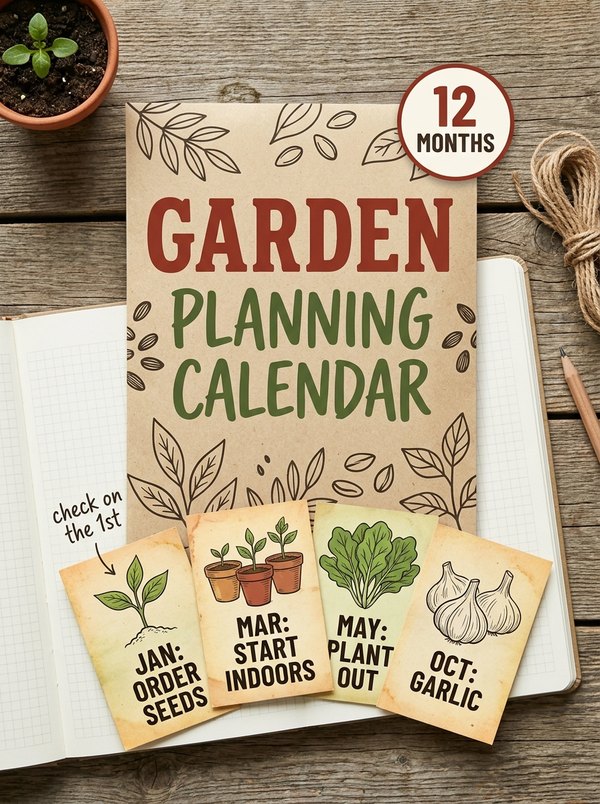
- Order seeds and draw your bed plan.
- Start onions and leeks indoors in late winter.
- Sharpen and repair tools.
March
- Start tomatoes, peppers and broccoli indoors under lights.
- Sow spinach and peas outdoors as soon as the soil can be worked.
- Top beds with compost.
April
- Plant potatoes, lettuce, radishes and onion sets.
- Harden off seedlings for a week before transplanting.
May
- Plant tomatoes, peppers, beans and squash after your last frost.
- Mulch beds once the soil warms.
From our bookshelf: The Self-Sufficient Backyard
A printed and digital project book about running a small homestead on a quarter acre or less: greenhouse, mini coop, garden layouts and many more step-by-step builds with photos and sketches.
See what is inside the bookAffiliate link. Sold through Digistore24; check the current price and refund terms on the order page. Results depend on your yard, climate and effort.June and July
- Harvest greens, peas and early zucchini.
- Water deeply and keep up with weeds.
- Sow fall carrots and beets in late July.
August
- Start fall brassicas and sow lettuce for autumn.
- Save seed from the best tomatoes and beans.
September
- Sow spinach and mache for the cold frame.
- Build or repair the cold frame.
October
- Plant garlic and spring bulbs.
- Clean up diseased plants and mulch empty beds.
Get the Free Backyard Homestead Planner
A printable one-page plan: map your yard, place beds, compost and a small flock, and stretch the season into winter.
Thank you! Your checklist is ready.
No spam. Unsubscribe anytime · Privacy
November and December
- Harvest kale, leeks and carrots.
- Write down what worked and what did not.
- Start next year's wish list.
Pin this calendar and check it on the first weekend of every month. Five minutes of planning saves hours of catching up.