 Bramble & Coop
Compost turns kitchen scraps and yard waste into dark, crumbly soil food. In a small yard it also means fewer bags at the curb and less money spent on bagged soil.
Greens and browns
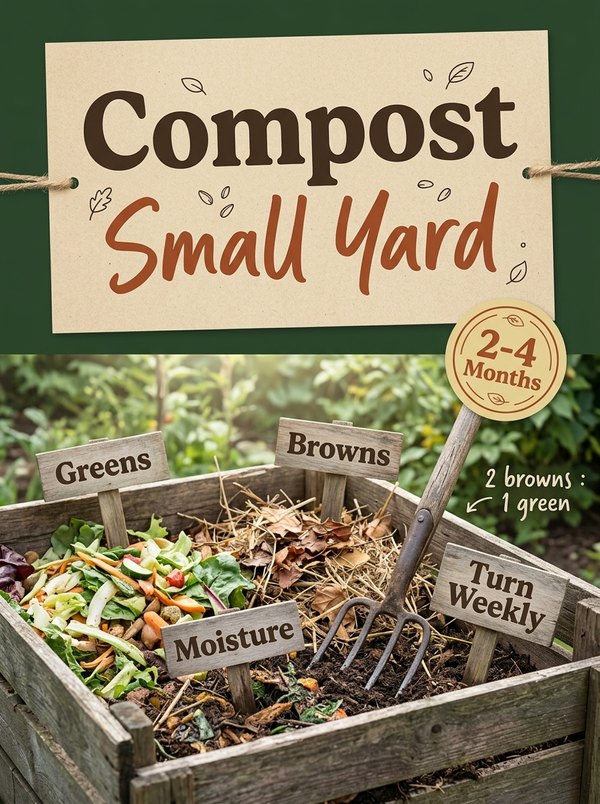
- Greens (nitrogen): vegetable scraps, coffee grounds, fresh grass clippings, chicken bedding with droppings.
- Browns (carbon): dry leaves, shredded cardboard, straw, wood chips.
Aim for roughly two to three buckets of browns for every bucket of greens. Too many greens make a pile slimy and smelly; too many browns make it slow.
Choose a bin
- A simple wire or pallet bin about 3 feet each way holds heat well.
- A closed plastic bin suits small or urban yards.
- A tumbler is tidy and quick to turn, though it holds less.
What to leave out
Meat, fish, dairy, greasy food and pet waste from dogs or cats attract pests and can carry pathogens. Leave out diseased plants and weeds with seed heads too.
Get the Free Backyard Homestead Planner
A printable one-page plan: map your yard, place beds, compost and a small flock, and stretch the season into winter.
Thank you! Your checklist is ready.
No spam. Unsubscribe anytime · Privacy
Keep it working
- Moisture like a wrung-out sponge.
- Turn the pile every week or two with a fork.
- Chop large pieces; smaller bits break down faster.
When is it ready?
Finished compost is dark, smells like forest soil and you can no longer recognize the original scraps. In an active pile that takes two to four months; a passive pile might take a year. Both work.
Leaf mold bonus
Bag or pile fallen leaves separately, keep them damp, and in a year you have leaf mold, a fantastic mulch and soil improver.
Keep a lidded bucket by the sink and a bag of dry leaves next to the bin. If adding browns is easy, the pile stays balanced.