 Bramble & Coop
Raised beds warm up earlier in spring, drain well and keep you from walking on the soil you just improved. For a beginner they are the easiest way to grow food in a small yard.
The right size
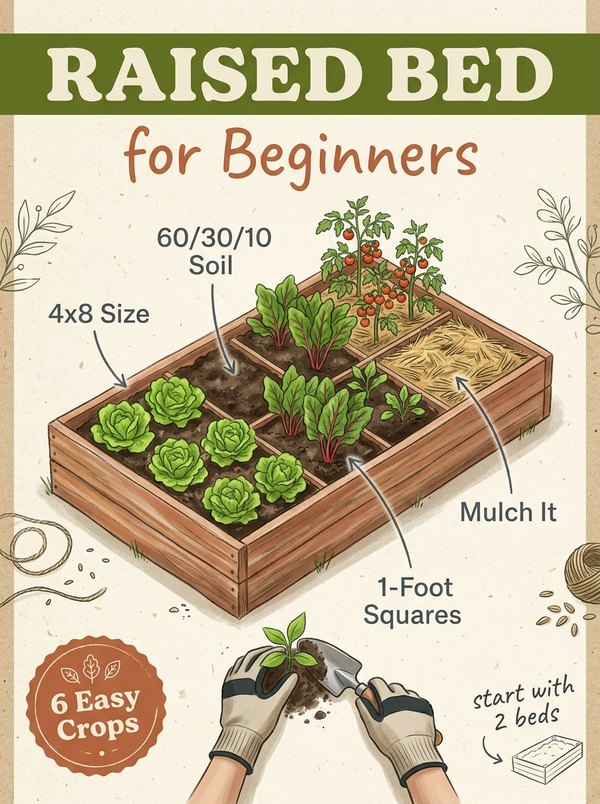
Make beds 4 feet wide so you can reach the middle from both sides, and 8 feet long so one bag of lumber covers it. Height of 10 to 12 inches is enough for most vegetables; go to 18 to 24 inches if bending is hard on your back.
Materials
- Untreated cedar or Douglas fir boards last 5 to 10 years.
- Galvanized metal beds last longer and heat up a little faster.
- Skip old railroad ties and any wood of unknown treatment.
Filling the bed
A simple mix that works: about 60 percent good topsoil, 30 percent finished compost and 10 percent something airy such as aged bark fines or perlite. Lay cardboard on the grass first; it smothers weeds and rots away by summer.
Get the Free Backyard Homestead Planner
A printable one-page plan: map your yard, place beds, compost and a small flock, and stretch the season into winter.
Thank you! Your checklist is ready.
No spam. Unsubscribe anytime · Privacy
Six forgiving first crops
- Lettuce and other salad greens
- Bush beans
- Zucchini (one plant is plenty)
- Cherry tomatoes on a sturdy cage
- Radishes for quick wins
- Swiss chard, which keeps producing for months
Spacing without math
Divide the bed into 1-foot squares with string. Plant one tomato per square, four lettuces per square, nine bush beans per square and sixteen radishes per square. It looks sparse at first and full by midsummer.
Water and mulch
Water deeply twice a week instead of a little every day, and cover bare soil with straw or shredded leaves. Mulch keeps moisture in and saves you most of the weeding.
Start with one or two beds. You can always add more next spring once you know how much time you really have.