 Bramble & Coop
Saving seed connects one season to the next. It costs nothing, and over a few years your plants slowly adapt to your own garden.
Start with the easy crops
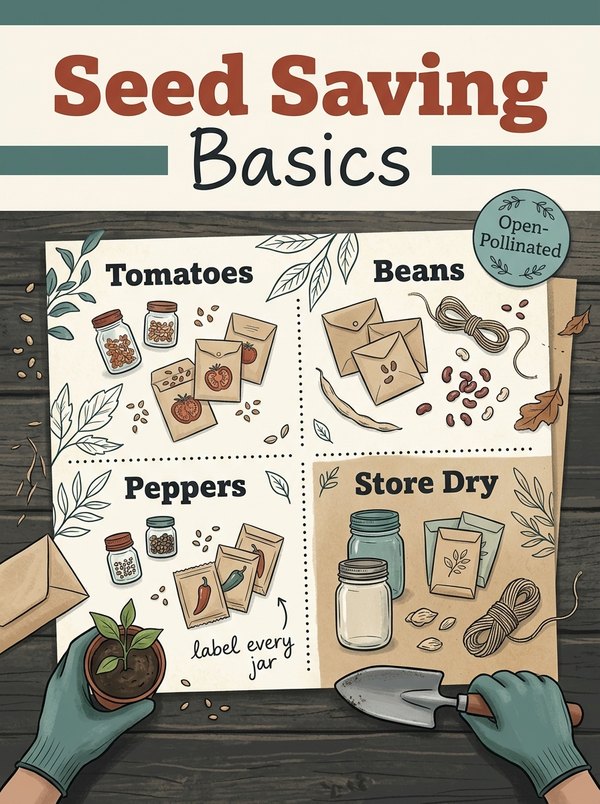
Tomatoes, beans, peas, peppers and lettuce mostly pollinate themselves, so seed from one plant usually grows true. Squash, cucumbers, corn and brassicas cross easily and are better left for later.
Open-pollinated, not hybrid
Save seed from open-pollinated or heirloom varieties. Seed from hybrids (marked F1 on the packet) may not resemble the parent plant.
Get the Free Backyard Homestead Planner
A printable one-page plan: map your yard, place beds, compost and a small flock, and stretch the season into winter.
Thank you! Your checklist is ready.
No spam. Unsubscribe anytime · Privacy
Beans and peas
Leave a few pods on the plant until they are dry and rattle. Shell them, spread the seeds on a plate for a week and store.
Tomatoes
Squeeze seeds and pulp from a ripe tomato into a jar with a little water. Let it sit for two to four days, stirring daily, until a film forms. Rinse the seeds in a strainer and dry them on a plate, not a paper towel they will stick to.
Peppers
Pick a fully ripe, colored pepper, cut it open and scrape the seeds onto a plate. Dry for a week or two.
Lettuce
Let a plant bolt and flower. When the fluffy seed heads appear, shake them into a paper bag every few days.
Storing seed
- Make sure seeds are completely dry.
- Paper envelopes or small jars, labeled with variety and year.
- Store cool, dark and dry. A jar in the fridge with a packet of silica gel works well.
Most seeds stay good for three to five years if stored well.
Choose seed from your best plants: the healthiest, earliest and tastiest. That is how home varieties get better every year.