 Bramble & Coop
Plenty of vegetables keep growing through light frosts, and some taste sweeter after a freeze. With a little cover, many of these give you harvests well into winter.
The tough list
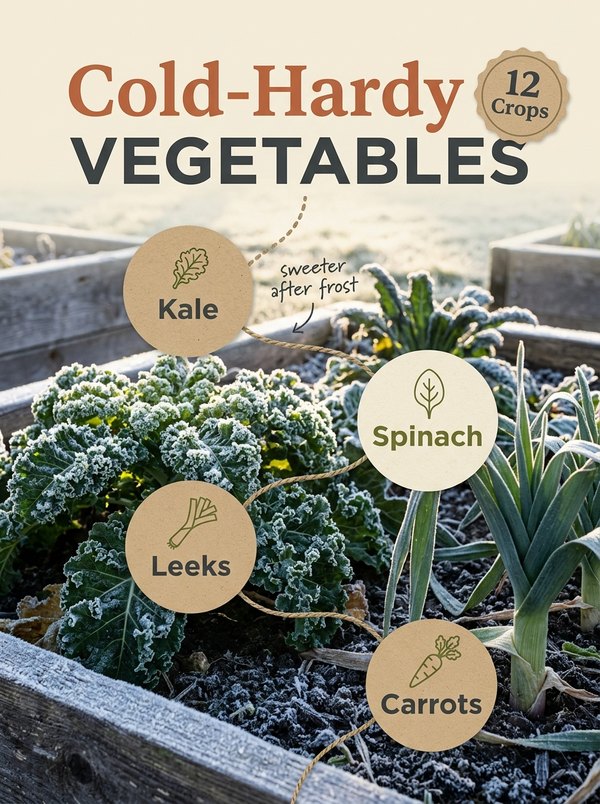
- Kale: survives into the teens F, sweeter after frost.
- Spinach: grows slowly all winter under a cold frame.
- Mache (corn salad): one of the hardiest salad greens.
- Collards: big, sturdy leaves for winter soups.
- Swiss chard: handles light frost; cover in hard freezes.
- Arugula: quick to grow in cool weather.
- Scallions: pull as needed all winter.
- Leeks: stand in the ground and wait for you.
- Carrots: mulch heavily and dig through winter.
- Parsnips: sweetest after a few hard frosts.
- Garlic: planted in fall, harvested next summer.
- Brussels sprouts: pick from the bottom up after frost.
Timing is everything
Most winter crops need to be well established before days get short. A rule of thumb: sow greens six to eight weeks before your first frost date, and transplant kale and collards a little earlier.
Simple protection
- Floating row cover adds several degrees of protection.
- A low tunnel with hoops and clear plastic does even more.
- A cold frame keeps greens picking into December in many zones.
- Thick straw mulch protects root crops in the ground.
Harvest the right way
Pick outer leaves from kale, chard and collards and let the center keep growing. Harvest in the afternoon when leaves have thawed, not in the frozen morning.
Get the Free Backyard Homestead Planner
A printable one-page plan: map your yard, place beds, compost and a small flock, and stretch the season into winter.
Thank you! Your checklist is ready.
No spam. Unsubscribe anytime · Privacy
Look up your average first frost date and count backward. That single date makes winter gardening work.