 Bramble & Coop
Fall cleanup is not about making the garden look bare. It is about removing problems, protecting soil and leaving a little shelter for the creatures that help you next year.
Cut back and remove
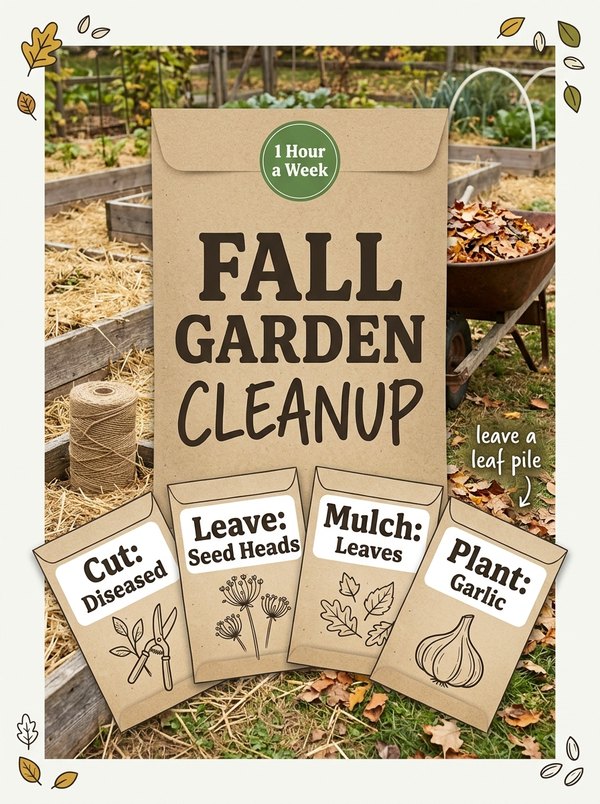
- Diseased plants: tomato vines with blight, powdery mildew on squash. Bag them; do not compost them.
- Spent annual vegetables that are done producing.
- Weeds that have set seed.
- Fallen fruit under trees, which can carry pests over winter.
Leave in place
- Seed heads of coneflowers, sunflowers and grasses for birds.
- Hollow perennial stems, cut to about 15 inches, for native bees.
- A small pile of leaves or sticks in a back corner.
- Roots of beans and peas: cut the plants at soil level and let the roots break down.
Protect the soil
Bare soil washes away and compacts in winter rain. Cover every empty bed with 2 to 3 inches of shredded leaves, straw or compost, or sow a cover crop such as winter rye or crimson clover in early fall.
Tools and hoses
- Drain and coil hoses before the first hard freeze.
- Clean and oil pruners and spades.
- Store bagged soil and amendments somewhere dry.
Plant for next year
Fall is the season for garlic, spring bulbs and many perennials. Plant garlic cloves about four weeks before the ground freezes, pointy end up, two inches deep, and mulch well.
Get the Free Backyard Homestead Planner
A printable one-page plan: map your yard, place beds, compost and a small flock, and stretch the season into winter.
Thank you! Your checklist is ready.
No spam. Unsubscribe anytime · Privacy
Write it down
Before you forget, write what grew well, what failed and what you want more of. That page becomes next year's plan.
A one-hour cleanup every weekend in October beats one exhausting day in November.